
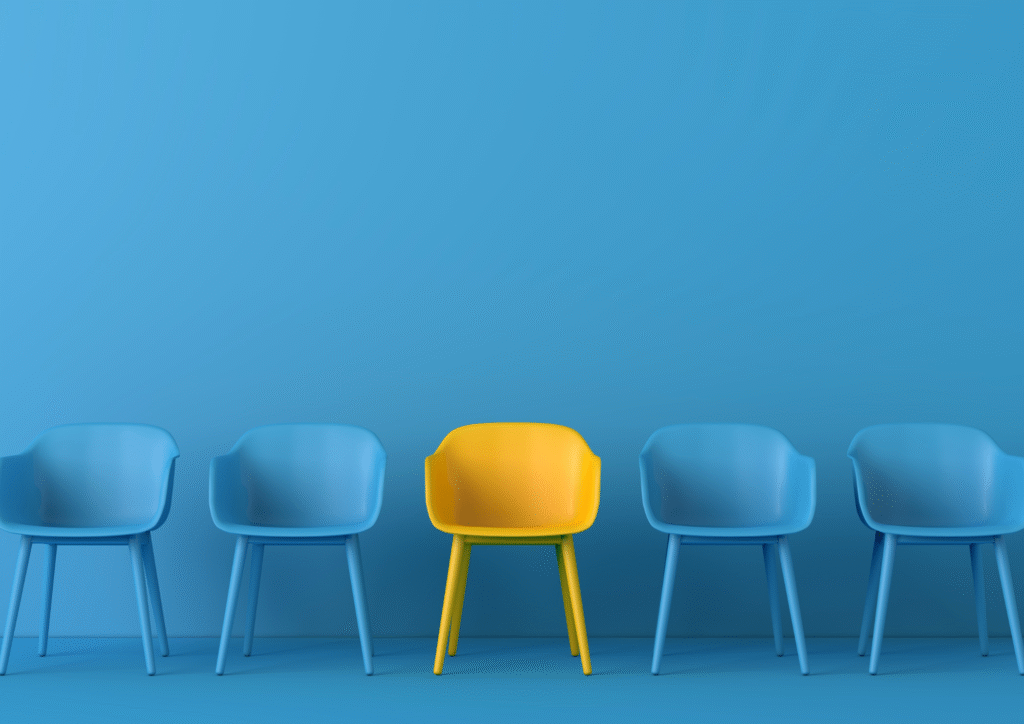
The chairs are scattered randomly around the room. One extra is added. The instruction sounds simple: “Make sure the zombie can’t sit down.”
Everyone laughs. It feels light and playful until the zombie starts walking. Within seconds, fun turns into stress. People jump up at the same time. Chairs remain empty, and suddenly there are gaps everywhere. Someone shouts, someone sighs, someone laughs it off. Coordination is lost, and within moments the zombie sits down.
Then comes a second round. And a third. With each attempt, the scene grows more chaotic. Voices overlap, people start blaming each other, and to regain control, someone suggests appointing a leader. Because with a leader, things will surely go better… right?
Until the team starts to slow down. Thoughts quiet. Eyes sharpen. A rhythm begins to emerge. People look first, then move. The team keeps the zombie away from the chairs noticeably longer.
The exercise seems simple, but within minutes it reveals how energy moves in a team when tension arises. Under pressure, teams often shift from collaboration to survival. The energy changes from passion to stress, from space to impatience, from trust to control. Only when the team dares to pause and reconnect can the energy realign. Not by working harder, but by tuning in better.
The zombiewalk is not a game, but a mirror of individual and team behaviour. It exposes what usually hides beneath agendas and meetings: where energy leaks, who channels tension into action, and who shuts down. Every team has its own energy system sometimes vibrant, sometimes blocked, sometimes tangled. Tension makes that system visible, if you dare to look at it and talk about it.
When a team dares to interrupt the chaos, to breathe, observe, and decide together how to move, something essential happens. The time the zombie stays off the chairs increases. Not because one person takes control, but because the team truly moves as one.
What seems frightening at first is often exactly what releases energy. It’s not the zombie itself, but the moment of slowing down that reveals where the team stands and what it needs to move forward. Teams that learn to work with tension, instead of around it, build sustainable energy that keeps flowing.
What happens to your team’s energy when things get tense?
